
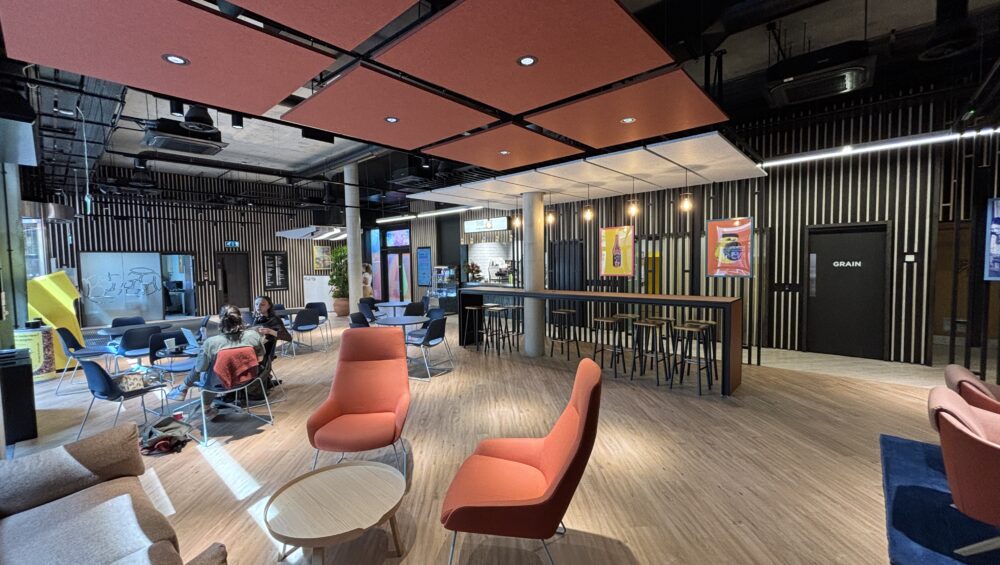
Open-plan workspaces remain a dominant feature of modern office design. They encourage collaboration, flexibility and efficient use of space, but they also introduce one of the most persistent challenges faced by designers and specifiers: noise.
Acoustic discomfort is consistently cited as a leading cause of reduced productivity, poor concentration and workplace dissatisfaction. For commercial interior designers, acoustic performance is no longer a secondary consideration or a value-engineering afterthought. It is a core component of workplace wellbeing, spatial functionality and long-term occupant satisfaction.
This article outlines a practical, specification-led approach to achieving acoustic comfort in open-plan environments, without compromising design intent.
Before solutions are specified, it is essential to understand what is actually causing acoustic discomfort.
In open-plan spaces, the most common issues include:
- Excessive reverberation caused by hard, reflective finishes such as glazing, concrete soffits and polished surfaces
- Speech intelligibility over distance, where conversations travel further than intended
- Lack of acoustic zoning, resulting in quiet and collaborative activities competing within the same space
- Mechanical and building services noise, which compounds speech-related distraction
From an acoustic perspective, the goal is rarely complete silence. Instead, the objective is acoustic control: managing how sound behaves within a space so that it supports the intended activities.

Effective acoustic design begins at layout stage.
Open-plan offices now typically support a range of activities, from focused individual work to informal collaboration and formal meetings. Acoustic comfort can only be achieved when these activities are acknowledged and planned for.
Key considerations include:
- Locating collaborative zones away from areas intended for focused work
- Using transitional spaces such as circulation routes, storage areas or informal touchdown zones as acoustic buffers
- Providing enclosed or semi-enclosed spaces for calls and meetings to reduce sound spill
Designing with acoustic zoning in mind reduces the burden on finishes and products later in the project.
Reverberation time is one of the most critical acoustic metrics in open-plan offices. Excessive reverberation amplifies noise, increases speech intelligibility over distance and contributes to overall discomfort.
The most effective way to control reverberation is by introducing sufficient sound-absorbing surfaces.
Ceilings often provide the largest uninterrupted surface area and are therefore one of the most efficient locations for acoustic treatment.
Options include:
- Acoustic ceiling rafts or baffles
- Suspended acoustic panels integrated with lighting and services
- Full acoustic ceiling systems where appropriate
Treatments at ceiling level are particularly effective in spaces with exposed soffits, where traditional suspended ceilings are not viable.
"Open-plan offices can be collaborative and comfortable. Achieving that balance requires informed design decisions, appropriate specification and a clear understanding of how sound behaves within space."
Walls offer an opportunity to introduce absorption closer to the source of sound, particularly in high-traffic or collaborative areas.
Acoustic wall panels can:
- Reduce flutter echo and lateral sound reflection
- Improve speech clarity locally while reducing overall noise build-up
- Be used as a visual feature or branding element
For designers, wall-based solutions provide flexibility in colour, texture and form, allowing acoustic performance to enhance rather than dilute the interior concept.
Furniture plays an important supporting role in acoustic comfort, particularly in open-plan environments where hard architectural surfaces dominate.
Effective strategies include:
- Upholstered seating with high-backed or winged designs to provide localised absorption
- Acoustic screens or dividers between workstations
- Soft finishes in breakout and informal meeting areas
While furniture alone will not resolve poor acoustics, it can significantly improve comfort when used alongside architectural acoustic treatments.
One of the common misconceptions in acoustic design is that adding absorption alone will solve all noise-related issues.
In reality, highly absorptive spaces can sometimes increase speech intelligibility over distance, making conversations more distracting rather than less.
For open-plan offices, designers should consider:
- Combining absorption with spatial separation and screening
- Introducing visual barriers that also limit sound propagation
- Using finishes and layouts that reduce direct sound paths between work areas
The aim is to reduce the clarity of unintended speech without compromising communication where it is required.
One of the common misconceptions in acoustic design is that adding absorption alone will solve all noise-related issues.
In reality, highly absorptive spaces can sometimes increase speech intelligibility over distance, making conversations more distracting rather than less.
For open-plan offices, designers should consider:
- Combining absorption with spatial separation and screening
- Introducing visual barriers that also limit sound propagation
- Using finishes and layouts that reduce direct sound paths between work areas
The aim is to reduce the clarity of unintended speech without compromising communication where it is required.
Acoustic comfort should not be delivered in isolation.
Integrated solutions that combine acoustics with lighting, wayfinding or ceiling services can:
- Reduce ceiling congestion
- Improve visual coherence
- Simplify coordination between trades
Early collaboration between interior designers, lighting designers, acoustic consultants and manufacturers allows these integrated approaches to be properly developed and detailed.
Acoustic comfort is no longer a hidden technical requirement. It is a visible, tangible part of the user experience and a clear indicator of design quality.
For commercial interior designers and specifiers, addressing acoustics early and holistically leads to:
- More functional and adaptable workplaces
- Improved occupant wellbeing and satisfaction
- Reduced post-occupancy complaints
- Spaces that genuinely support how people work
Open-plan offices can be collaborative and comfortable. Achieving that balance requires informed design decisions, appropriate specification and a clear understanding of how sound behaves within space.
Explore our Acoustic Product Range, request material samples, or book a CPD session with our team to learn how acoustic solutions can elevate your workplace designs Contact Us.
All of our solutions are tested to UK fire safety standards and available in a wide palette of natural shades to complement any aesthetic – from corporate to creative.
