For much of the past twenty years, discussions about workplace design have revolved around a surprisingly binary question: should offices be open-plan or should they provide more enclosed spaces?
It has been a debate that has shaped countless office fit-outs, influenced furniture manufacturers, informed workplace strategies and generated an endless stream of opinion pieces. Open-plan offices have been praised for encouraging collaboration and criticised for creating distraction. Cellular offices have been celebrated for supporting concentration and criticised for discouraging communication.
The problem with this debate is not that either side is entirely wrong. Rather, it is that the question itself has become too simplistic.
Work has changed considerably since the modern office first emerged, yet much of the conversation continues to frame workplace design as though organisations must choose between openness and privacy. Increasingly, the most successful workplaces recognise that this is a false choice.
The future of workplace design is unlikely to be defined by whether an office is open or enclosed. Instead, it will be defined by how well it understands human behaviour.
That may sound like a subtle distinction, but it represents a significant shift in thinking. Rather than asking what an office should look like, designers and employers are beginning to ask a more interesting question: how do people actually work?
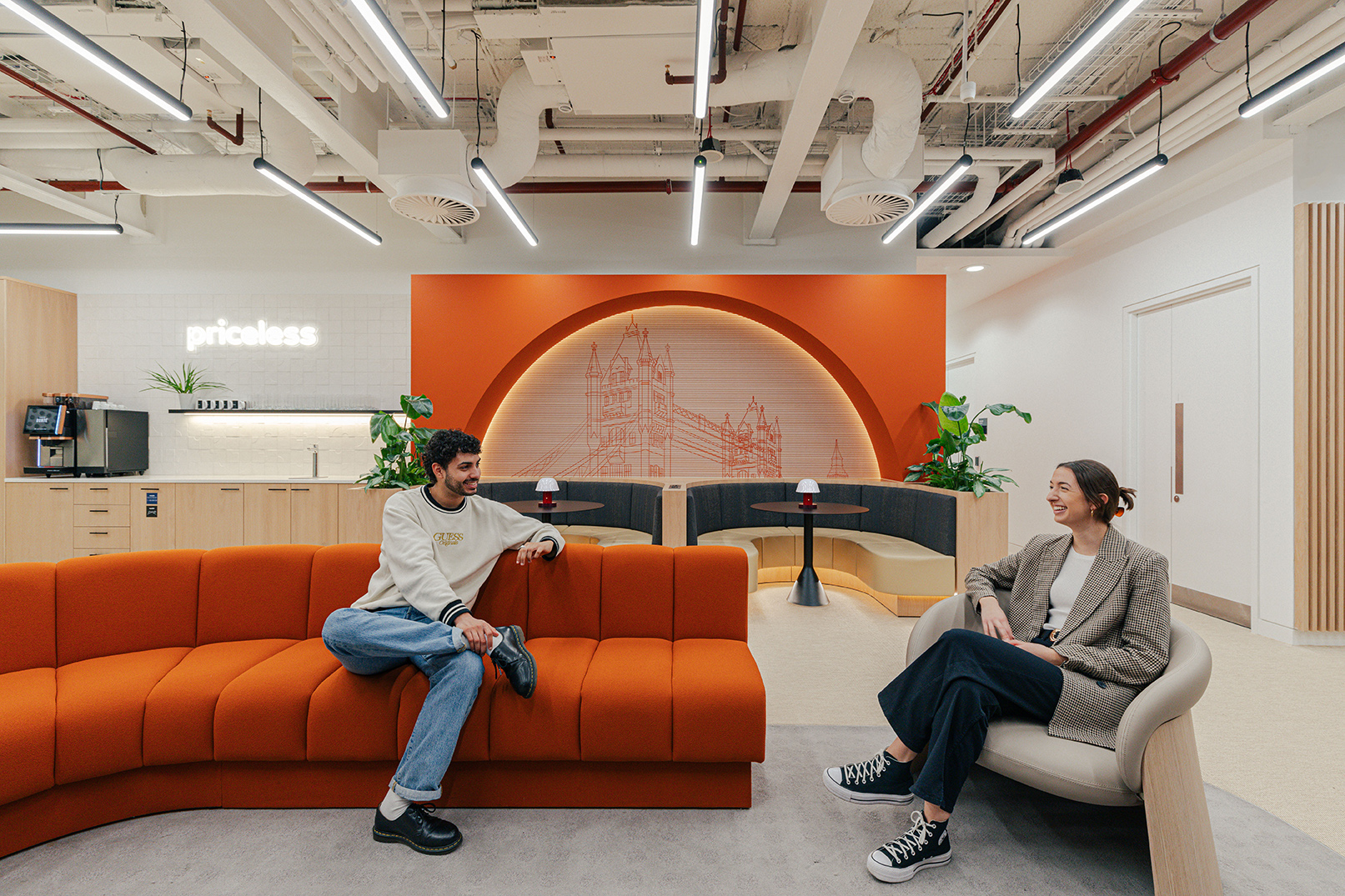
It is easy to think of work as a single, uniform activity. After all, most organisations describe their employees simply as “being at work”. Yet anyone who has spent time in a modern office knows that the reality is far more complex.
An architect reviewing technical drawings, a project manager leading a client meeting, a designer developing concepts, a finance team analysing data and colleagues catching up over coffee are all working. However, each activity demands something different from the surrounding environment.
Some tasks require sustained concentration and minimal interruption. Others depend upon spontaneous conversation or collaborative problem-solving. Certain discussions need privacy, while others benefit from openness and visibility. Creative thinking often alternates between periods of lively debate and quiet reflection.
These differences matter because environments influence behaviour. A space that encourages one type of activity may unintentionally make another much more difficult.
The challenge, therefore, is not to identify the perfect office layout. It is to recognise that there is no such thing.
Traditionally, workplace design has focused on allocating space efficiently. Questions about desk density, circulation, occupancy and meeting room provision have understandably occupied much of the conversation. These considerations remain important, particularly as organisations seek to make better use of their buildings.
Increasingly, however, workplace strategy is moving beyond the efficient allocation of space towards a broader understanding of how environments influence behaviour.
This represents an important evolution.
Rather than beginning with the question, “How many desks do we need?”, organisations are asking, “What kinds of work need to happen here?”
The distinction is more than semantic.
If the purpose of an office is simply to accommodate people, then efficiency becomes the obvious priority. If the purpose of an office is to support thinking, collaboration, creativity and decision-making, then understanding human behaviour becomes equally important.
This shift helps explain why many contemporary workplaces now contain a wider variety of settings than they did even ten years ago. Alongside traditional workstations, it is increasingly common to find quiet libraries, informal lounges, project rooms, enclosed focus booths, social cafés and flexible collaboration spaces.
These environments are not simply aesthetic choices. They acknowledge that different tasks require different conditions
Few developments have influenced workplace thinking more profoundly than hybrid working.
Much of the early discussion understandably focused on where people worked. Gradually, however, the conversation has become less about location and more about purpose.
If employees can complete certain tasks effectively from home, then what should the office provide that other environments cannot?
The answers vary between organisations, but a common theme has emerged.
The office is increasingly valued as a place for interaction, mentoring, creativity, learning and relationship building. Equally, there is growing recognition that not every moment spent in the office should be collaborative. Concentrated individual work remains an essential part of many professions, even within highly social workplaces.
Perhaps the most enduring lesson from hybrid working has not been that people wish to avoid the office. It is that they value greater control over how and where different types of work take place.
Choice has become an expectation rather than a luxury.
The most effective workplaces recognise this by offering a range of environments that employees can select according to the task at hand, rather than expecting one setting to support every activity equally well.
"Good workplace design is not about creating a single perfect environment. It is about creating the right environment for each moment of the working day."
Another important development shaping workplace design is the growing appreciation that people experience environments differently.
For many years, offices were often designed around the idea of an average employee. In practice, no such person exists.
People differ in how they process information, respond to sensory stimulation and prefer to work. Some find lively environments energising, while others find the same conditions mentally demanding. For neurodivergent individuals in particular, factors such as background noise, visual movement and constant interruption may have a greater impact on comfort and concentration.
Recognising these differences does not require organisations to create entirely separate workplaces for different groups of people. Rather, it encourages designers to provide greater variety, flexibility and choice within the same environment.
A workplace that offers quiet areas alongside collaborative spaces is not simply supporting one type of employee over another. It is acknowledging that every individual, regardless of how they think, benefits from having access to different environments at different times.
Inclusivity, in this sense, becomes less about providing special accommodations and more about creating workplaces that recognise the diversity of human behaviour.
When discussing workplace design, it is often the visual elements that receive the greatest attention. Furniture, finishes, colour palettes and architectural features naturally dominate photography and marketing material because they are immediately visible.
Yet many of the factors that shape our daily experience of an office are far less obvious.
Lighting influences comfort, alertness and the character of a space. Air quality contributes to how refreshed or fatigued people feel throughout the day. Acoustics determine whether conversations remain localised or become distractions for everyone nearby. Spatial planning influences how confidently people move through an environment and whether they feel able to choose an appropriate place to work.
These elements rarely attract the same attention as dramatic architectural features, but together they create the conditions in which work actually happens.
This is one reason why workplace design has become increasingly multidisciplinary. Architects, interior designers, lighting designers, acoustic specialists, engineers and workplace consultants each contribute different expertise to creating environments that perform well over time.
The most successful projects recognise that these disciplines are interconnected. Good acoustic design supports concentration, but it also improves the quality of conversations. Thoughtful lighting contributes to visual comfort while reinforcing the identity of different spaces. Materials shape both aesthetics and acoustic performance.
The experience of a workplace is rarely determined by a single design decision. It emerges from the interaction of many.
Perhaps one of the most interesting shifts in workplace thinking is the move away from seeing offices as large, uniform floors towards viewing them as collections of distinct places.
This mirrors the way we naturally experience towns and cities.
Within a city, we instinctively understand that different places support different activities. A café encourages informal conversation. A library encourages quiet concentration. A public square invites gathering, while a park offers space for reflection.
Each place communicates its purpose through its design.
The same principle increasingly applies within workplaces.
Rather than expecting a single open-plan floor to accommodate every activity equally well, designers are creating a series of interconnected environments that support different forms of work. The office becomes less like one room and more like a neighbourhood, offering a variety of destinations that people move between as their day unfolds.
This approach reflects an important truth about knowledge work.
People rarely spend an entire day doing the same thing.
The workplace should not expect them to.
The debate surrounding open-plan offices is unlikely to disappear entirely. Every organisation has different priorities, different cultures and different operational requirements. There will never be a universal solution, nor should there be.
What is changing is the nature of the conversation.
Rather than asking whether workplaces should be open or enclosed, organisations are beginning to ask whether they provide the right conditions for the different ways in which people think, communicate and create.
That represents a more mature understanding of workplace design.
Buildings do not produce great work. People do.
The role of the workplace is therefore not simply to accommodate employees, nor even to impress visitors. Its purpose is to create environments that enable people to perform at their best, recognising that performance looks different from one moment to the next.
The offices that will stand the test of time are unlikely to be remembered because they followed the latest design trend. They will be remembered because they understood something more fundamental.
That good workplace design is not about creating a single perfect environment.
It is about creating the right environment for each moment of the working day.
Explore our Acoustic Product Range, request material samples, or book a CPD session with our team to learn how acoustic solutions can elevate your workplace designs Contact Us.
All of our solutions are tested to UK fire safety standards and available in a wide palette of natural shades to complement any aesthetic – from corporate to creative.
