
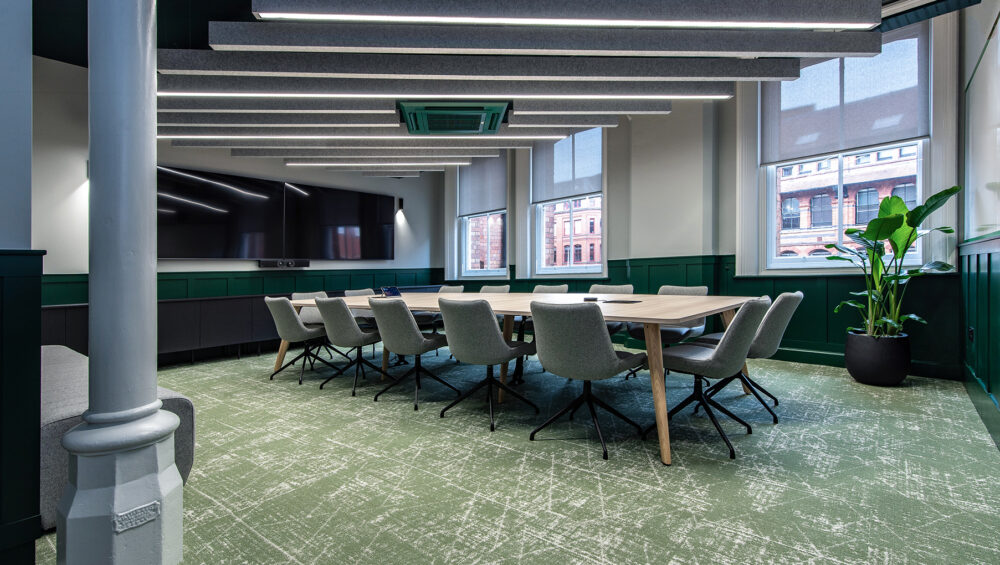
In commercial interiors, much has been said about lighting, layout, and materials – but sound remains one of the most overlooked elements in workplace design. Yet growing research confirms that acoustic comfort directly impacts employee well-being, focus, and job satisfaction. As designers shape spaces to support hybrid working, collaboration, and neurodiversity, acoustics must be part of the conversation from the start.
The modern office is evolving – with open-plan layouts, agile work zones, breakout spaces and exposed ceilings creating visually dynamic spaces. But they often come at a cost: high reverberation, increased background noise, and lack of speech privacy.
Acoustic design is about managing how sound behaves in a space. It’s not about making things silent – it’s about controlling reflection, diffusion, and absorption to create a balanced soundscape that aligns with how the space is used.
Focus zones need low noise levels and limited echo. Social and collaborative areas should support clear, natural conversation without noise spill. By designing with acoustics in mind, you can ensure every part of the workspace performs as intended.

Uncontrolled noise isn’t just irritating – it’s stressful. Over time, it can raise cortisol levels, contribute to fatigue, and even trigger anxiety. For neurodivergent individuals, the impact is often amplified, making it harder to concentrate, communicate or feel at ease.
Introducing acoustic materials like suspended baffles, felt wall panels or ceiling rafts helps reduce reverberation and harsh noise. These interventions soften the overall sound, support sensory comfort, and create calmer, more inclusive environments where people feel mentally supported throughout the day.
Noise is consistently one of the top complaints in open-plan offices. Even moderate background sound – such as casual chatter, keyboard clicks or HVAC hum – can reduce cognitive performance and increase task error rates.
High-performance acoustic panels improve speech intelligibility and limit disruptive sound travel. The result? Clearer thinking, fewer distractions, and more productive time on task. In spaces like meeting rooms or quiet zones, this directly supports the goals of the layout and enhances the overall workplace experience.
When employees feel that their environment enables them to work effectively – rather than battling against it – they’re more engaged, more productive, and more likely to stay. Acoustic comfort also improves collaboration by reducing the strain of trying to hold conversations in noisy settings or constantly repeating information.
Designing with acoustic comfort in mind demonstrates care for employee well-being and builds a workplace culture where people feel valued and empowered.
"Acoustic design isn’t about making spaces silent – it’s about shaping sound to support focus, collaboration, and well-being."
At ekko Acoustics, we collaborate with interior designers and architects to integrate high-performing, sustainable acoustic solutions into commercial projects. Our products include sculptural ceiling baffles, fabric-covered wall panels, acoustic felt rafts, and custom-cut designs made from recycled materials.
All of our solutions are tested to UK fire safety standards and available in a wide palette of natural shades to complement any aesthetic – from corporate to creative.
Explore our Acoustic Product Range, request material samples, or book a CPD session with our team to learn how acoustic solutions can elevate your workplace designs Contact Us.
All of our solutions are tested to UK fire safety standards and available in a wide palette of natural shades to complement any aesthetic – from corporate to creative.
