Post-Pandemic Office Design Is Over: Welcome to the Performance Workplace Era
Insights for design professionals shaping the next generation of workspace
For the last few years, “post-pandemic office design” has been the dominant narrative. We’ve talked endlessly about hybrid working, flexible layouts, desk ratios, and whether anyone actually needs a fixed workstation ever again.
That conversation is now finished.
Not because those issues have disappeared, but because they’ve been absorbed into something bigger, more demanding, and significantly more interesting:
The performance workplace era.
This isn’t about designing offices that simply accommodate work. It’s about designing environments that actively improve how work is performed, cognitively, acoustically, socially, and physically.
And for interior designers, architects, and design & build teams, that shift changes everything.
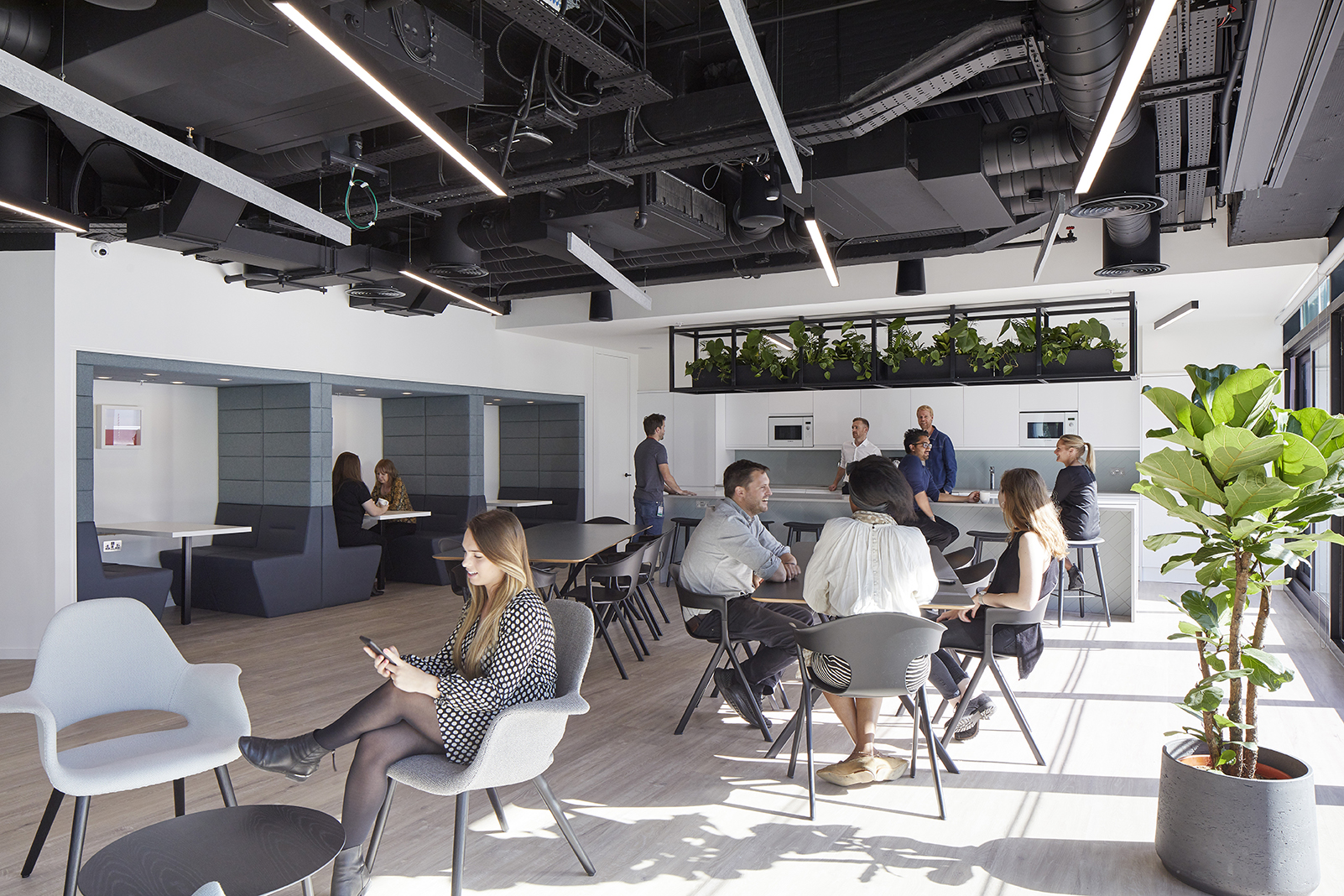
The early post-pandemic phase was defensive in tone. Offices were trying to justify their existence:
- “We’re more flexible now”
- “We’ve added breakout spaces”
- “We’ve got Zoom rooms”
- “We’re hybrid-ready”
But hybrid is no longer a differentiator. It’s the baseline.
The real question now is brutally simple:
Why should someone travel into this building when they could work elsewhere?
The answer is no longer furniture, finishes, or even aesthetics. It’s performance conditions:
- Cognitive performance (focus, clarity, reduced fatigue)
- Acoustic performance (speech intelligibility, privacy, control)
- Social performance (collaboration density, spontaneity, energy)
- Physiological performance (comfort, lighting quality, circadian alignment)
In other words, the office is now competing with home, cafés, and co-working spaces on human output, not just occupancy.
Traditionally, office design success was measured in:
- Floorplate efficiency
- Desk count
- Fit-out cost per m²
- BREEAM / WELL ratings
These still matter, but they are no longer sufficient.
We are now designing for neuro-environmental efficiency (even if no one is putting that on a tender document yet).
This includes:
1. Acoustic clarity over acoustic treatment
Open-plan offices didn’t fail because they were open. They failed because they were acoustically uncontrolled systems.
Key metrics now include:
- Speech Transmission Index (STI)
- Background noise levels (NR curves / dB(A) comfort bands)
- Reverberation time (RT60 in occupied vs unoccupied states)
Design implication: Acoustic solutions are no longer “wall panels added at the end”. They must be embedded into the architectural language, ceilings, lighting integration, partitions, and spatial zoning.
2. Lighting as a productivity system, not a layer
We’ve moved beyond “good LED and uniform illumination”.
Modern workplace lighting design considers:
- Vertical illuminance for facial clarity and social interaction
- Tunable white systems aligned with circadian rhythm support
- UGR control for prolonged screen-based work environments
- Layered lighting scenes for task vs collaborative modes
Lighting is now a behavioural tool, not a compliance exercise.
3. Spatial acoustics as invisible architecture
One of the biggest shifts in workplace performance thinking is the recognition that sound defines behaviour more than space planning does.
Two identical floorplans can perform completely differently depending on acoustic design.
This is where integrated acoustic systems become critical:
- Absorptive ceiling geometries
- Wall-mounted broadband absorption
- Suspended acoustic forms that break up reflective paths
- Fabric systems that respond to zoning rather than decoration
At ekko Acoustics, this is increasingly about designing sound fields, not products.
"The office is no longer a static interior. It is a managed environmental system designed to be tuned over time."
One of the most interesting developments in workplace design is the move away from function-based zoning (meeting, desk, breakout) to energy-based zoning:
- High-focus zones (low stimulus, high absorption, controlled lighting)
- Collaboration zones (moderate noise tolerance, higher visual stimulation)
- Social zones (intentional acoustically “livelier” environments)
- Transitional zones (corridors, thresholds, acoustic buffers)
This shift is subtle but powerful. It acknowledges that people don’t just use space—they move through different cognitive states during the day.
Acoustics used to be treated as a compliance layer. Something to “fix” after the design was resolved.
That approach is now actively damaging project outcomes.
Why?
Because in high-performance workplaces:
- Poor acoustics increases cognitive load
- Cognitive load reduces collaboration quality
- Reduced collaboration undermines office attendance
- Lower attendance undermines the business case for the building
Acoustics is no longer about comfort; it’s about workplace viability.
Material selection is also evolving.
We are seeing increased demand for:
- Recycled PET acoustic substrates
- Low-VOC, breathable fabric systems
- Modular, reconfigurable acoustic components
- Hygienic, washable acoustic surfaces for shared environments
- Fire-rated systems that don’t compromise aesthetic intent
The key shift: materials are expected to contribute to performance, not just appearance.
Perhaps the most significant change is philosophical.
The office is no longer a static interior. It is a managed environmental system, designed to be tuned over time:
- Lighting scenes adjusted by time of day and occupancy
- Acoustic layouts adapted to team density
- Furniture reconfigured around project cycles
- Soft architectural elements used to rebalance spatial energy
Design is no longer finished at handover. It is continuously calibrated.
For interior architects, designers, and D&B professionals, the implication is clear:
Beautiful offices are no longer enough.
High-performance offices require:
- Integrated acoustic + lighting thinking from concept stage
- Early collaboration with specialist manufacturers
- Evidence-based design decisions (not just aesthetic ones)
- A shift from “space planning” to “environment engineering”
The winners in this next era will be the teams who understand that performance is not an add-on—it is the design brief.
The post-pandemic office was about returning to work.
The performance workplace is about improving it.
And as expectations rise, the line between interior design and environmental engineering is getting thinner by the day.
For those designing the next generation of workplaces, the question is no longer:
“What should this office look like?”
It is:
“What should this office do for the people inside it?”
Explore our Acoustic Product Range, request material samples, or book a CPD session with our team to learn how acoustic solutions can elevate your workplace designs Contact Us.
All of our solutions are tested to UK fire safety standards and available in a wide palette of natural shades to complement any aesthetic – from corporate to creative.
