
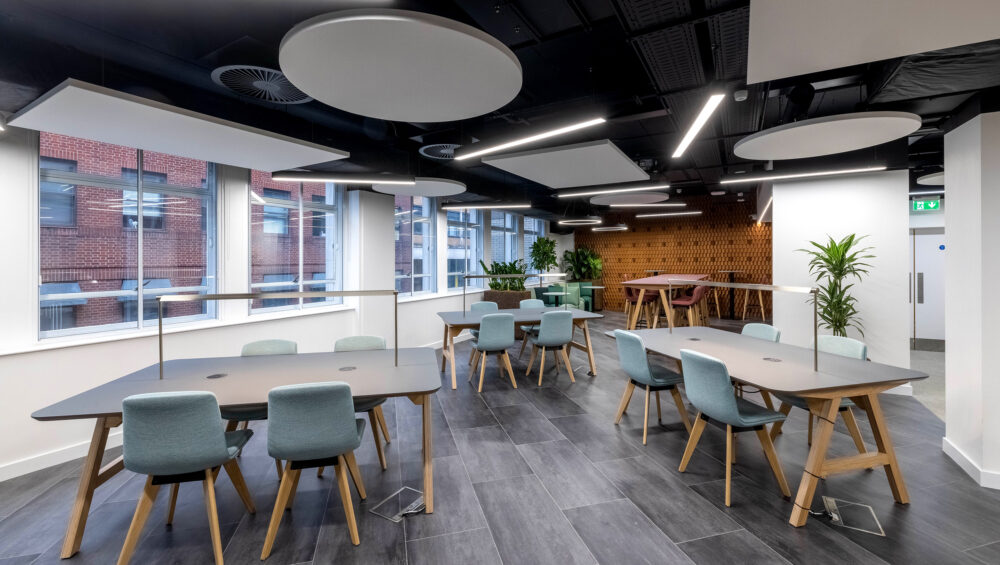
By now, we’ve looked at the science of sound and why acoustic comfort is critical in commercial interiors. But how do you apply that understanding to real-world projects?
Designers and specifiers are faced with an overwhelming number of acoustic product choices — panels, baffles, rafts, partitions, curtains, ceiling grids — all in a variety of materials, densities, and shapes. The key isn’t just knowing what each product does. It’s knowing where and why to use it.
Acoustic design is context-driven. Different environments bring different challenges — and opportunities. Let’s walk through some of the most common spaces and how to make them sound (and feel) better.
In an open-plan office, the main acoustic issues are speech intelligibility, lack of privacy, and visual distractions. People aren’t just working — they’re talking, concentrating, collaborating, and sometimes trying to do all three in the same space.
The goal here isn’t silence. It’s controlled sound: enough absorption to reduce harsh reverberation, enough zoning to separate noise-generating areas (like breakout spaces) from quiet zones, and enough masking to reduce speech distraction without deadening the space.
Best acoustic interventions:
Ceiling baffles and rafts: These reduce reverberation and are especially effective in double-height spaces or offices with hard flooring.
Wall panels: Strategic placement behind desks or in meeting zones improves clarity and reduces flutter echo.
Zoning elements: Acoustic partitions, felt screens or even planter walls made with acoustic core can separate noisy and quiet areas without closing off light.
Sound masking systems (if required): In very large or high-density offices, adding ambient sound can improve focus by lowering the intelligibility of nearby speech.
Reverberation time target: 0.6 – 1.0 seconds
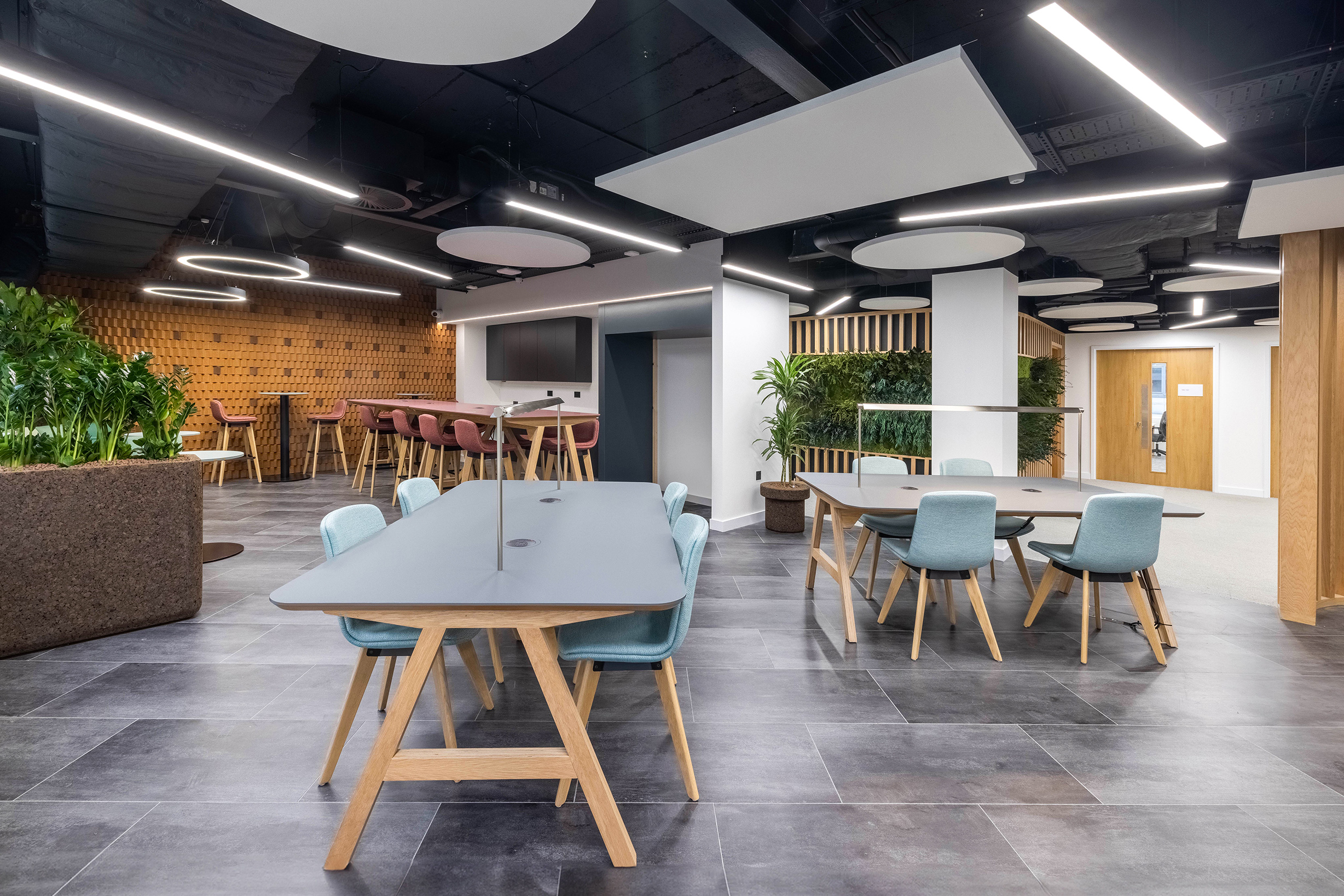
Coworking environments are more dynamic than traditional offices. They’re often designed to be sociable, creative, and visually appealing — but without proper acoustic planning, they can become chaotic.
You’re designing for a mixed audience: people making calls, hosting meetings, doing deep work, or relaxing in breakout zones. That means layered acoustic control is vital.
Acoustic strategies for coworking:
Suspended ceiling rafts and sculptural baffles: These can double as focal points while reducing overall room reverberation.
Soft wall treatments in breakout lounges, nooks, and booths — especially where hard surfaces dominate.
Phone booths or acoustic pods: For calls and video meetings, these should be sound-isolated and lined with absorbent materials internally.
Material variation: Use a combination of acoustic felt, timber, soft upholstery, and rugs to create a rich yet controlled soundscape.
Key challenge: Creating acoustic zoning without hard separation.
Noise is consistently one of the top complaints in open-plan offices. Even moderate background sound – such as casual chatter, keyboard clicks or HVAC hum – can reduce cognitive performance and increase task error rates.
High-performance acoustic panels improve speech intelligibility and limit disruptive sound travel. The result? Clearer thinking, fewer distractions, and more productive time on task. In spaces like meeting rooms or quiet zones, this directly supports the goals of the layout and enhances the overall workplace experience.
Meeting rooms often suffer from paradoxical problems: too much reverberation inside, and too little isolation from the spaces around them. It’s crucial that these rooms support intelligible speech while maintaining speech privacy — especially for HR, legal or strategic conversations.
What to consider:
High-performance wall and ceiling panels: Prioritise absorption at speech frequencies (500 Hz – 4000 Hz).
Carpet or soft flooring where possible, to reduce footfall noise and balance reflective surfaces.
Well-sealed doors and isolated partitions to prevent leakage.
Ceiling-mounted rafts are ideal where hard floors or glass walls are non-negotiable.
Reverberation target: 0.4 – 0.6 seconds
STC target for isolation: At least 45–50
Reception spaces and double-height atriums often lean heavily on aesthetic impact — polished floors, high ceilings, dramatic lighting. But acoustically, these spaces are often the worst performers. Sound bounces freely, creating long reverb tails, and speech becomes lost in the space.
The challenge is to treat these areas without compromising the design intent.
Smart acoustic solutions:
Architectural ceiling treatments: Sculptural baffles, cloud rafts or wave systems (like Ekko’s Aqua) absorb sound while enhancing visual drama.
Wall panels in complementary colours or custom shapes to reflect brand identity.
Soft furnishings and materials: Upholstered seating, thick rugs, and acoustic light fittings (like acoustic pendant shades or PET-covered feature luminaires) contribute to performance.
Reverberation target: 1.0 – 1.2 seconds
Tip: Focus on mid- and high-frequency absorption to control speech clarity without killing ambience.
“Acoustic design isn’t about eliminating sound — it’s about creating spaces that sound as good as they look.”
Restaurants require a careful acoustic balance. A bit of buzz creates atmosphere — but when it crosses the line into noise, it ruins the experience. Guests raise their voices, conversations become strained, and customer satisfaction drops.
Designers need to focus on creating an environment where people can enjoy a conversation at their table without hearing five others around them.
Key acoustic moves:
Ceiling rafts or PET-felt disks: Hung above seated areas to reduce reverb without dominating the design.
Felt wall panels: Especially effective in booths or along long flat walls.
Acoustic barriers between tables: These can be decorative — slatted timber, felt-wrapped dividers, even plant screens with acoustic cores.
Tabletop acoustics: Where budgets allow, table screens or acoustic accessories can refine sound at the most intimate level.
Target noise levels:
60–65 dB during peak hours
RT60: Under 1.0 seconds in most cases
In retail, acoustics contribute to how a brand feels. A high-end boutique might aim for a hushed, luxurious ambience. A sports store might want energy and volume — but still needs control. Designers must align the acoustic environment with the customer journey.
What works:
Ceiling grids or baffle systems: Great for large-format stores or supermarkets with exposed ceilings.
Felt panels with branding or graphic print: Combining function and visual merchandising.
Wall-mounted diffusers: Useful in stores with highly reflective surfaces — stone, tile, metal fixtures.
Goal: Match the acoustic profile to the brand tone — elegant, energetic, calm, urban, etc.
The best acoustic solution is the one that solves the actual problem — and fits the context.
-
Use ceiling rafts or baffles when you have volume to work with. Ideal in high-ceilinged offices, coworking, restaurants and atriums.
-
Use wall panels when floorplans are tight or when you want to introduce visual rhythm and colour.
-
Use partitions to add privacy or zoned acoustics without interrupting flow.
-
Combine materials — acoustic felt, timber, cork, upholstery — to create a layered, effective acoustic palette.
And always consider placement. A poorly placed high-performance panel won’t outperform a strategically placed modest one.
Acoustic design isn’t about eliminating sound. It’s about creating spaces that sound as good as they look. That means tuning each environment to its purpose — reducing stress, improving speech, encouraging focus, or softening a crowd.
At Ekko Acoustics, we help designers find the right balance — whether that’s sculptural rafts for a double-height lobby or felt wall panels that double as art. Our solutions are tested, sustainable, and always driven by how people experience space.
Next in the series: We’ll dive deeper into materials — comparing felt, timber, cork and more, and explaining how their acoustic performance and sustainability profiles differ.
