For decades, ceilings have largely been treated as a necessity. They concealed building services, housed lighting and helped meet acoustic requirements, but rarely became part of the design conversation.
That is changing.
Today’s commercial interiors demand far more from every surface. As organisations seek to create workplaces that support collaboration, wellbeing and productivity, the ceiling has become an opportunity rather than an afterthought.
Acoustic ceilings are now shaping how spaces look, feel and perform.
Interior designers often refer to the ceiling as the “fifth wall”, and for good reason.
Unlike furniture or finishes, the ceiling spans an entire space, making it one of the most powerful architectural elements available. When designed thoughtfully, it can define zones, influence movement through a building and create a strong visual identity.
At the same time, it plays a critical role in controlling sound.
Modern workplaces have embraced open-plan layouts and collaborative environments, but these spaces often introduce unwanted noise. Conversations travel further, video calls compete with background chatter and concentration becomes increasingly difficult.
Acoustic ceiling systems solve these challenges while contributing to the overall aesthetic of a project.
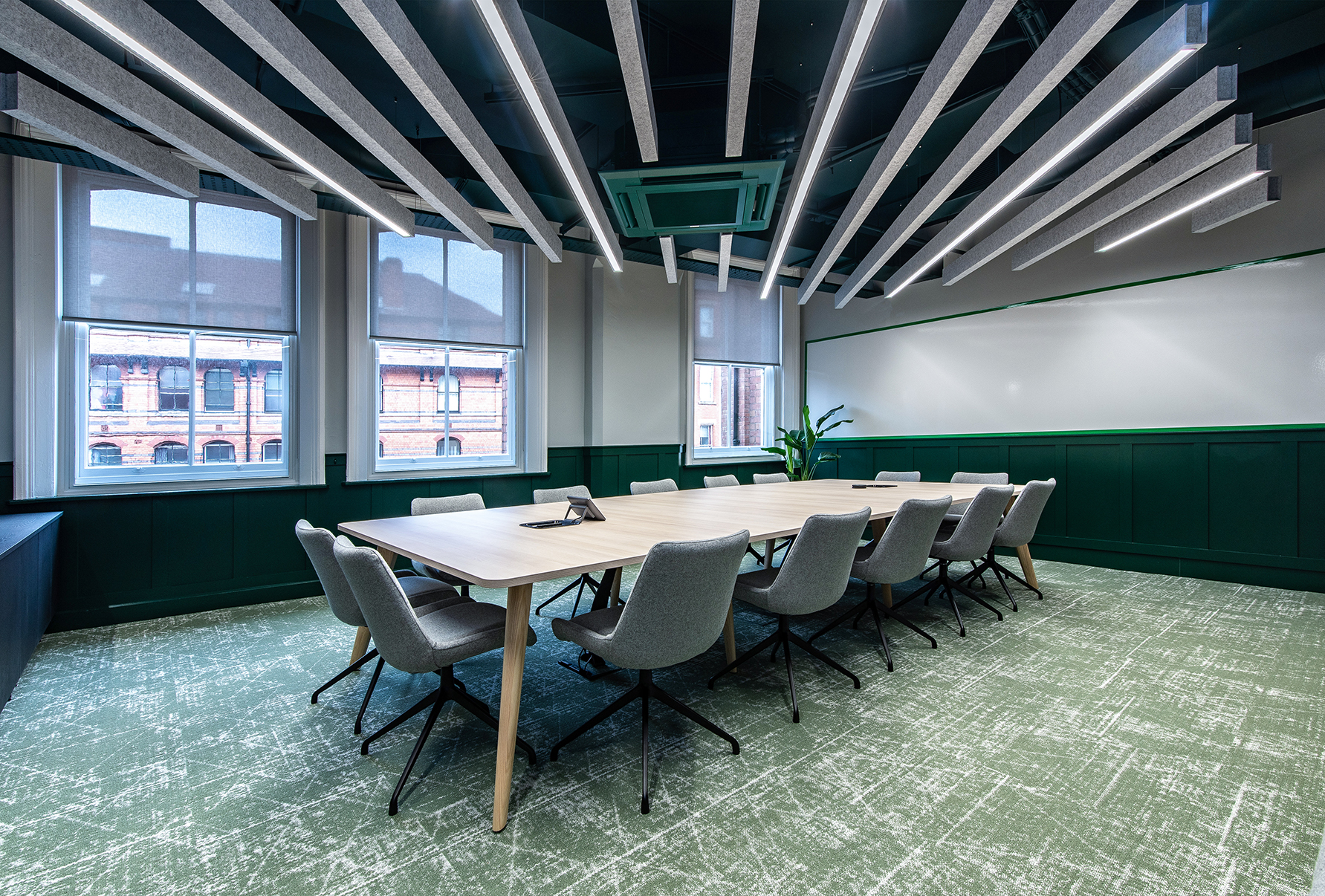
The impact of poor acoustics is often underestimated.
Excessive reverberation makes conversations harder to follow, increases fatigue and reduces concentration. In offices, education settings and hospitality environments, these effects influence both wellbeing and productivity.
Well-designed acoustic ceilings help by:
- Reducing reverberation and echo
- Improving speech intelligibility
- Creating quieter, more comfortable environments
- Supporting focus and collaboration
- Enhancing the overall occupant experience
The result is a space that doesn’t simply look impressive. It performs better for the people who use it every day.
One of the biggest changes in recent years has been the evolution of acoustic materials themselves.
Gone are the days when acoustic treatment meant plain ceiling tiles or bulky absorbers hidden from view.
Today’s solutions allow designers to make acoustics part of the architecture.
Suspended baffles introduce rhythm and movement across large spaces. Floating rafts create visual interest while defining meeting areas. Modular ceiling systems add structure and flexibility, while bespoke installations transform ceilings into sculptural design features.
The ceiling becomes an integral part of the interior rather than simply the place where services disappear.
Workplace design is becoming increasingly human-centred.
Organisations want environments that reflect their culture, support wellbeing and create memorable experiences for employees and visitors alike.
Colour plays a significant role in achieving this.
Rather than relying solely on neutral palettes, designers are introducing natural tones, layered textures and biophilic influences to create warmer, more welcoming interiors.
At ekko Acoustics, our collection of 30 PET felt colours, inspired by Britain’s landscapes, gives designers the flexibility to create acoustic solutions that complement almost any interior concept.
Whether the goal is a calm, understated workspace or a bold architectural statement, colour becomes another design tool rather than a limitation.
"The ceiling is no longer simply the surface above us. It has become one of the most exciting opportunities in commercial interior design."
Specification decisions are increasingly influenced by environmental performance alongside aesthetics and functionality.
Architects and designers are looking for products that support responsible design while delivering long-term value.
Acoustic ceiling systems manufactured from recycled PET felt help contribute towards these objectives by combining excellent acoustic performance with more sustainable material choices.
As commercial interiors continue to evolve, sustainability is no longer a specialist consideration. It is becoming a fundamental part of every successful project.
The workplace of 2026 and beyond will continue to place greater emphasis on experience.
Organisations want offices that encourage collaboration, attract talent and support employee wellbeing. Designers want products that provide creative freedom without sacrificing technical performance.
Acoustic ceilings meet both requirements.
They improve how spaces sound, influence how they feel and increasingly define how they look.
The ceiling is no longer simply the surface above us.
It has become one of the most exciting opportunities in commercial interior desi
At ekko Acoustics, we work with architects, interior designers and contractors to create acoustic ceiling solutions that combine exceptional acoustic performance with inspiring design.
Whether you’re developing a workplace, education facility, hospitality venue or public space, our team can help you create environments that people enjoy spending time in.
Explore our range of acoustic ceiling solutions or speak to our team to discuss your next project. Contact Us
