
In today’s competitive labour market, salary and benefits alone are no longer enough to secure the best people. The physical workplace has become a strategic tool — one that shapes how employees feel, perform, and ultimately decide whether to join or stay with an organisation. For forward-thinking businesses, office design is no longer a cost centre; it is a talent strategy.
For commercial interior designers and workplace decision-makers, this shift presents both a challenge and an opportunity: to create spaces that people actively want to work in.
For candidates, the office is a tangible expression of a company’s values. Long before they experience leadership style or career progression, they see the workplace.
Research consistently shows that workplace appearance strongly influences attraction. Modern, creative environments can dramatically increase an employer’s appeal, while facilities and overall workplace quality play a decisive role in job choice. How office environment influences staff attraction & retention
A well-designed office communicates:
- Investment in people
- Organisational stability and ambition
- Attention to detail
- A progressive culture
In contrast, outdated or poorly maintained spaces can signal the opposite — even if the organisation itself is strong.
Employees spend thousands of hours in their workplace over their careers. Small environmental frustrations accumulate into major dissatisfaction.
Key drivers of satisfaction include:
- Comfort
- Access to natural light
- Air quality
- Noise levels
- Layout usability
- Availability of suitable work settings
Studies show that access to daylight and views significantly improves wellbeing, with a large majority of employees saying it would influence their decision to stay with an employer.
Similarly, comfortable, aesthetically pleasing environments increase morale, motivation, and engagement, all precursors to retention. The Benefits of a Well-Designed Office
Modern employees increasingly prioritise health, both physical and mental. Office design can either support or undermine this.
Physical wellbeing factors
- Ergonomic furniture
- Adjustable workstations
- Good lighting
- Thermal comfort
- Air quality
Mental wellbeing factors
- Acoustic comfort
- Access to nature
- Quiet zones
- Breakout areas
- Colour and visual stimulation
Noise, in particular, is a major workplace stressor. Acoustic treatments and dedicated quiet areas can significantly reduce distraction and cognitive fatigue. The Impact of Office Design on Mental Health and Employee Retention
When employees feel that their environment supports rather than drains them, loyalty rises. Organisations with high-quality workplace design often experience lower turnover and stronger employer appeal.
For companies investing in acoustic solutions, a core strength of ekko Acoustics this is a critical insight: sound is not a finishing touch, but a performance driver.
A well-designed office doesn’t just make people happier; it helps them do better work.
Healthy, comfortable environments can increase productivity significantly while reducing errors and fatigue. The ROI of Employee Wellness – How Office Design Impacts Productivity and Retention
Flexible, agile workplaces also correlate with higher employee satisfaction and responsiveness to changing demands. What is Good Office Design & Why it Matters
Design influences performance through:
- Reduced distractions
- Better concentration
- Efficient workflows
- Appropriate spaces for different tasks
- Improved communication
Zoned environments, combining focus areas, collaborative zones, and social spaces, support diverse working styles and personalities, making workplaces more inclusive and effective. How Office Design Affects Employee Retention
"Office design is no longer a cost centre, it is a talent strategy"
Employees rarely leave organisations where they feel connected. Workplace design can either strengthen or weaken those bonds.
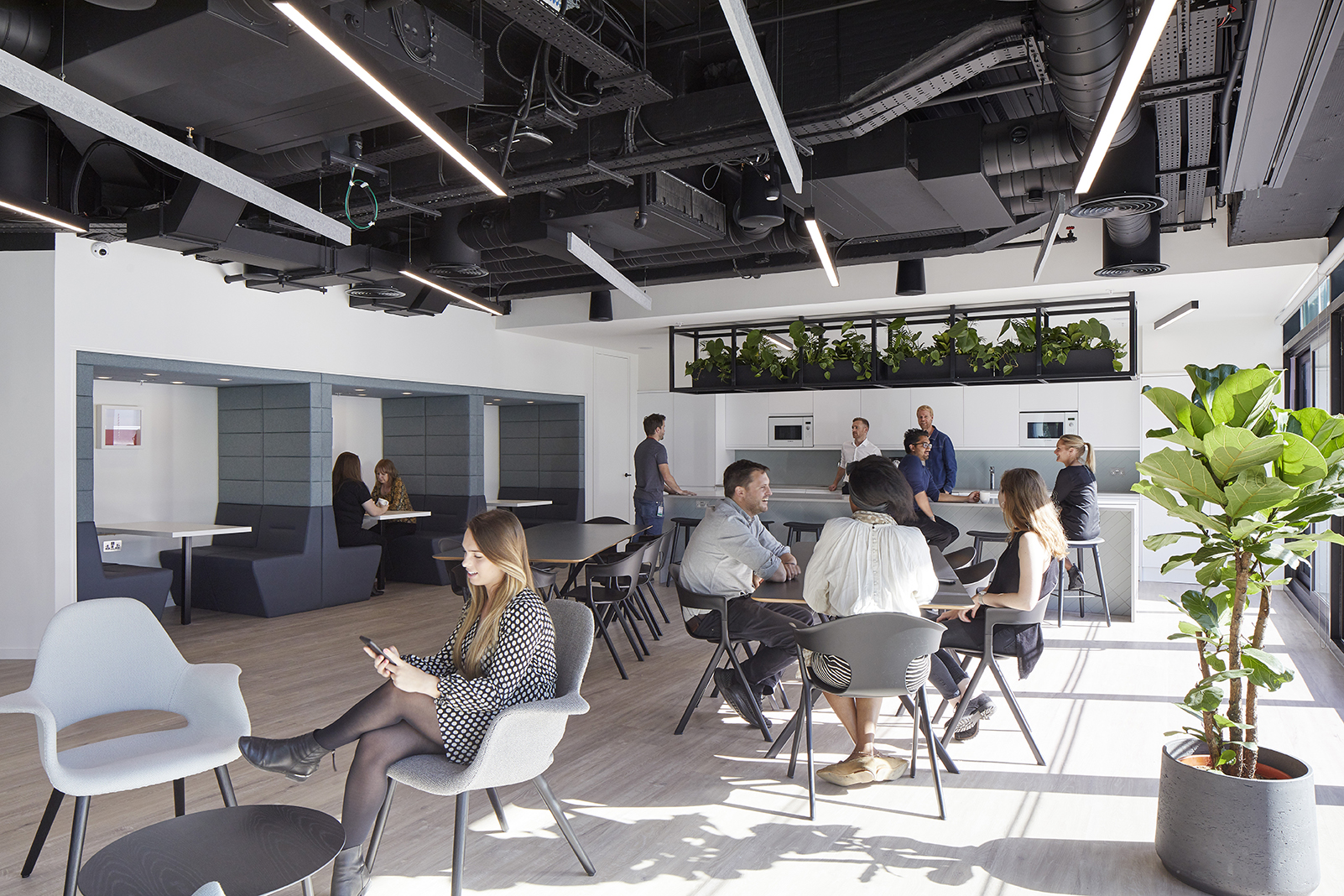
Spaces that encourage informal interaction, lounges, shared kitchens, breakout areas, help build relationships and a sense of community.
This matters because retention is not purely rational. It is emotional.
When people feel:
- Recognised
- Connected
- Comfortable
- Proud of their workplace
they are far more likely to stay.
Hybrid working has fundamentally changed expectations. Employees want choice, where to focus, collaborate, socialise, or decompress.
Flexible offices demonstrate that an organisation trusts its workforce and supports different working styles.
Features that attract talent today include:
- Hot-desking or activity-based working
- Informal meeting spaces
- Technology-enabled collaboration zones
- Quiet rooms
- Spaces for video calls
- Touchdown areas
Providing a range of settings empowers employees to work in ways that suit them best, increasing both engagement and loyalty. The Impact of Office Design on Employee Retention: Why It Matters
Nature-inspired design has moved from trend to expectation.
Incorporating natural elements, plants, daylight and organic materials has been shown to reduce stress, boost creativity, and improve satisfaction. Employee Retention Through Office Design: The Hidden Benefits
These elements also signal environmental responsibility, an increasingly important factor for younger talent.
Poorly designed workplaces don’t just fail to attract talent; they actively drive people away.
Inefficient layouts, lack of suitable meeting spaces, and uncomfortable environments waste time, reduce productivity, and contribute to dissatisfaction.
High turnover carries enormous hidden costs:
- Recruitment expenses
- Training time
- Lost knowledge
- Reduced team cohesion
- Lower morale
Viewed through this lens, investing in workplace design often delivers a strong return.
The most successful organisations treat their workplace as part of their employer brand and business performance strategy.
A high-performing office should:
- Reflect company values and identity
- Support wellbeing and productivity
- Enable collaboration and focus
- Provide flexibility
- Create pride and belonging
- Deliver a memorable experience
Companies that invest in people-centred design see measurable improvements in retention, engagement, and organisational culture.
Talent attraction and retention ultimately come down to how people feel. Office design shapes those feelings every day.
A thoughtfully designed workplace signals respect, supports performance, and creates an environment where employees can thrive. In a competitive hiring landscape, that can be the difference between securing exceptional talent and losing it to a more appealing employer.
For designers, architects, and organisations alike, the message is clear: the workplace is no longer just where work happens; it is a powerful tool for building the workforce of the future.
Explore our Acoustic Product Range, request material samples, or book a CPD session with our team to learn how acoustic solutions can elevate your workplace designs Contact Us.
All of our solutions are tested to UK fire safety standards and available in a wide palette of natural shades to complement any aesthetic – from corporate to creative.
