
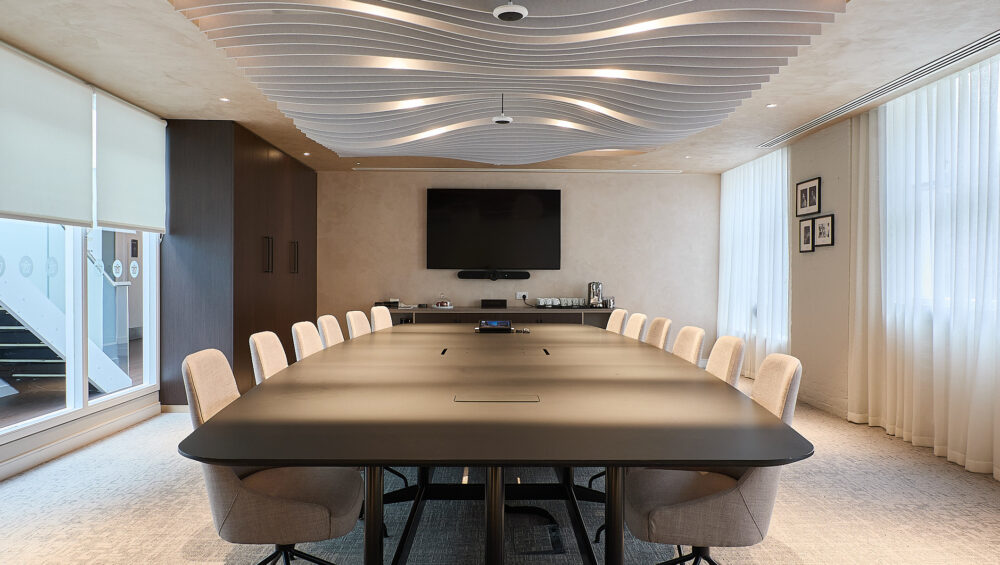
In many commercial interiors, acoustics are still an afterthought. The finishes look great, the lighting is on trend, the layout is open and inviting, yet something feels off. There’s a hum of background noise that won’t disappear, conversations become tiring, and people struggle to concentrate. That “something” is usually sound.
At ekko Acoustics, we help designers and clients get the most out of their spaces by treating sound not as a problem to fix at the end, but as a fundamental design layer, just like lighting, layout or ventilation. The acoustics of a space have a profound impact on how people experience it, especially in workplaces, hospitality, and education environments.
We rarely think about how sound behaves — until it behaves badly. In open-plan offices, for example, the same layout that encourages collaboration can also spread unwanted noise. Conversations, phone calls, footsteps, HVAC systems — in a space without acoustic treatment, these sounds bounce off hard surfaces, building into a layer of background noise that’s hard to tune out.
It’s not just distracting. Studies show that excessive noise raises stress levels, reduces focus, and impacts cognitive performance. And it doesn’t take much: open offices that register above 50 dB(A) — common without proper acoustic design — have been shown to reduce productivity by up to 15%. Even in creative environments where a bit of buzz is welcomed, there’s a threshold where sound becomes counterproductive.
In restaurants, something similar happens. A lively atmosphere can quickly tip into a chaotic one, with customers raising their voices to be heard, triggering a kind of escalating feedback loop. The result is less enjoyment, faster table turnover, and lower return visits — none of which help the bottom line.
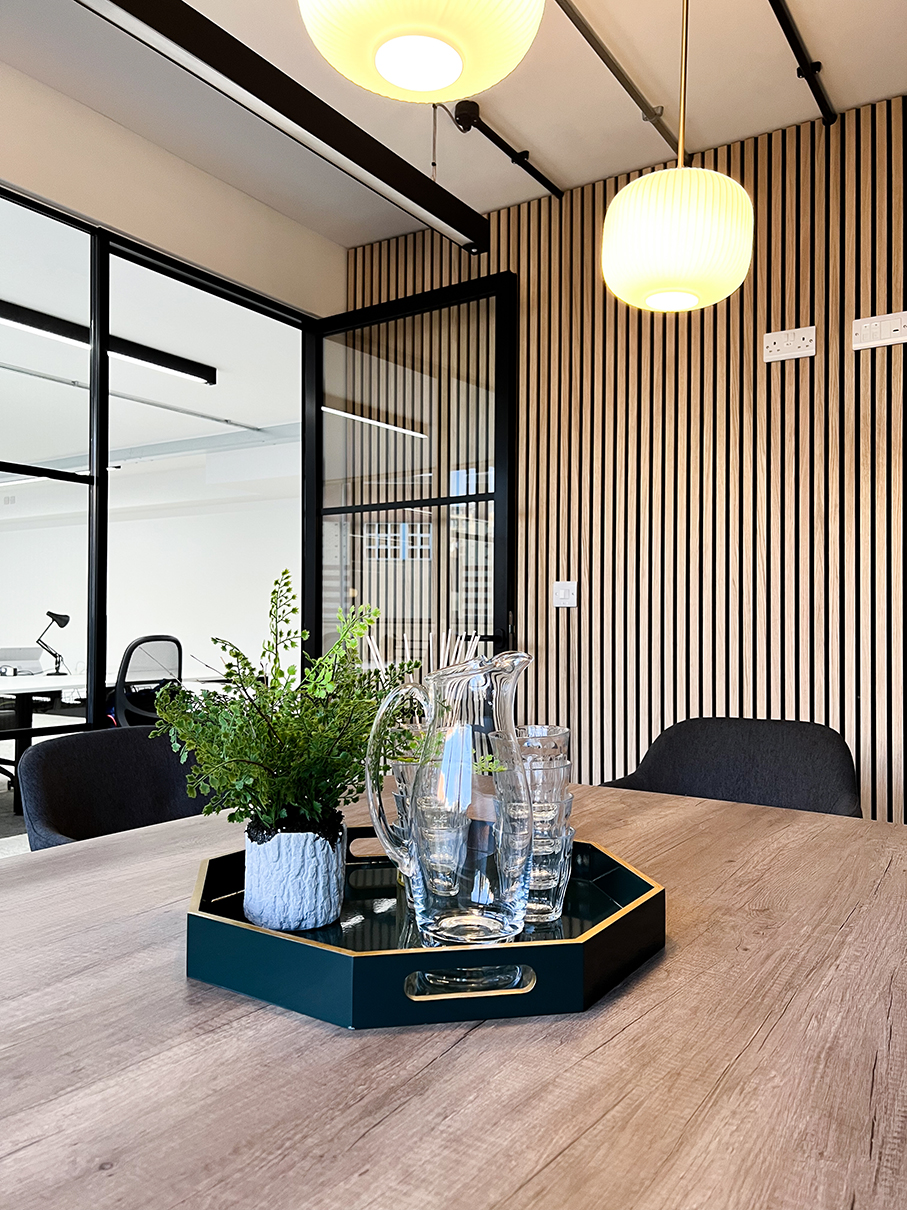
When we talk about acoustics, we’re not just talking about reducing noise. We’re talking about shaping sound to support the activity of a space. That might mean dampening reverberation in a boardroom so speech is crisp and clear, or softening background noise in a coworking space so people can work without distraction.
The technical side of this comes down to a few key measures. The first is reverberation time, or RT60 — the time it takes for sound to decay by 60 decibels. In a well-designed meeting room, this might be around 0.5 seconds. In a hard-surfaced atrium, it could be over 2 seconds — which means echoes, muddled speech, and raised voices. The second is ambient noise level, measured in dB(A), where the ideal range depends on the space. Open-plan offices tend to work best in the 45–50 dB(A) range, while classrooms and healthcare settings need it quieter.
There’s also a difference between absorbing sound, isolating it, and masking it. Absorption reduces the energy of sound waves, helping control reverberation. Isolation prevents sound from travelling between spaces — useful for privacy. Masking, meanwhile, involves adding carefully shaped background noise to reduce the perception of speech and improve comfort in open environments.
The problem in most commercial interiors is that they’re filled with surfaces that reflect sound — glass, concrete, steel, wood. And modern design trends often remove barriers like doors and partitions in favour of open zones and sightlines. While these choices help natural light and collaboration, they also amplify sound-related challenges.
That’s where acoustic materials and thoughtful product choices come in. A well-placed ceiling raft can absorb overhead reverberation in an atrium. Acoustic wall panels, whether soft felt or sculpted timber, can transform a reflective surface into a sound-dampening feature. Lighting can do double duty — delivering both illumination and acoustic control when integrated with absorbing material.
At ekko, we’ve developed a range of solutions to tackle these problems creatively. From sculptural baffles that float in space to modular wall systems that combine form and function, every piece is designed not just to work, but to look good while doing it.
“Acoustic design isn’t just about reducing noise - it’s about shaping how people feel, focus, and interact in a space.”
People rarely notice good acoustics — but they instantly feel the difference. Conversations are easier. Concentration improves. Stress reduces. In spaces with good sound design, people stay longer, perform better, and feel more at ease.
The return on investment is tangible. Whether it’s higher productivity in an office, better learning outcomes in a classroom, or improved customer satisfaction in a restaurant, the benefits of acoustic comfort are real — and increasingly, expected.
Yet many designers still wait until the last minute to think about acoustics, or treat it as a technical afterthought. It doesn’t have to be that way.
Explore our Acoustic Product Range, request material samples, or book a CPD session with our team to learn how acoustic solutions can elevate your workplace designs Contact Us.
All of our solutions are tested to UK fire safety standards and available in a wide palette of natural shades to complement any aesthetic – from corporate to creative.
Next in the series:
We’ll dive deeper into how sound works — covering reverberation, frequency, material properties and what every designer needs to know about acoustics.
