
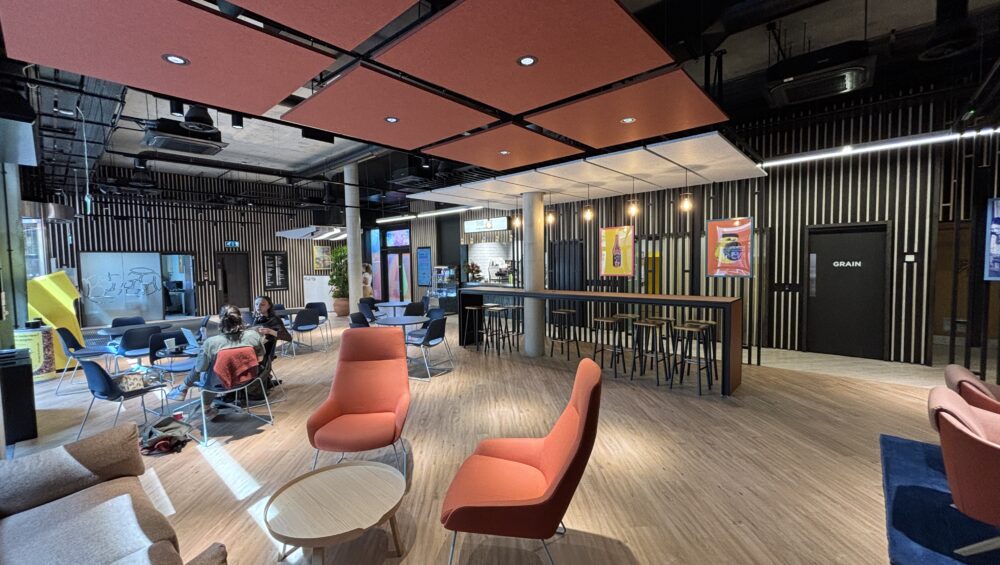
When designing commercial spaces — from open-plan offices to coworking lounges and client-facing showrooms — acoustics can’t be left to chance. Good design is measurable, and acoustic performance is no exception. In this instalment, we’ll explore the science behind acoustic standards, the role of reverberation time, and the measurable targets that designers and specifiers should keep in mind when creating high-performance interiors.
Sound has a profound impact on how we work, think, and feel. Yet, unlike lighting levels or air temperature, acoustic performance is often undervalued in the early stages of spatial planning. This oversight can result in environments that are visually stunning but sonically hostile — with poor speech intelligibility, high stress levels, and plummeting productivity.
To avoid these outcomes, several recognised standards have been established to guide the acoustic design of workplaces, educational environments, and public spaces.
Reverberation Time (RT60)
Reverberation time is the length of time it takes for sound to decay by 60 decibels after the source has stopped. In short: it’s the echo or “tail” left in the room once a sound ends.
- Ideal RT for open-plan offices: 0.6–0.8 seconds
- Meeting rooms and boardrooms: 0.4–0.6 seconds
- Reception areas or atria: Up to 1.0 seconds can be acceptable, depending on use
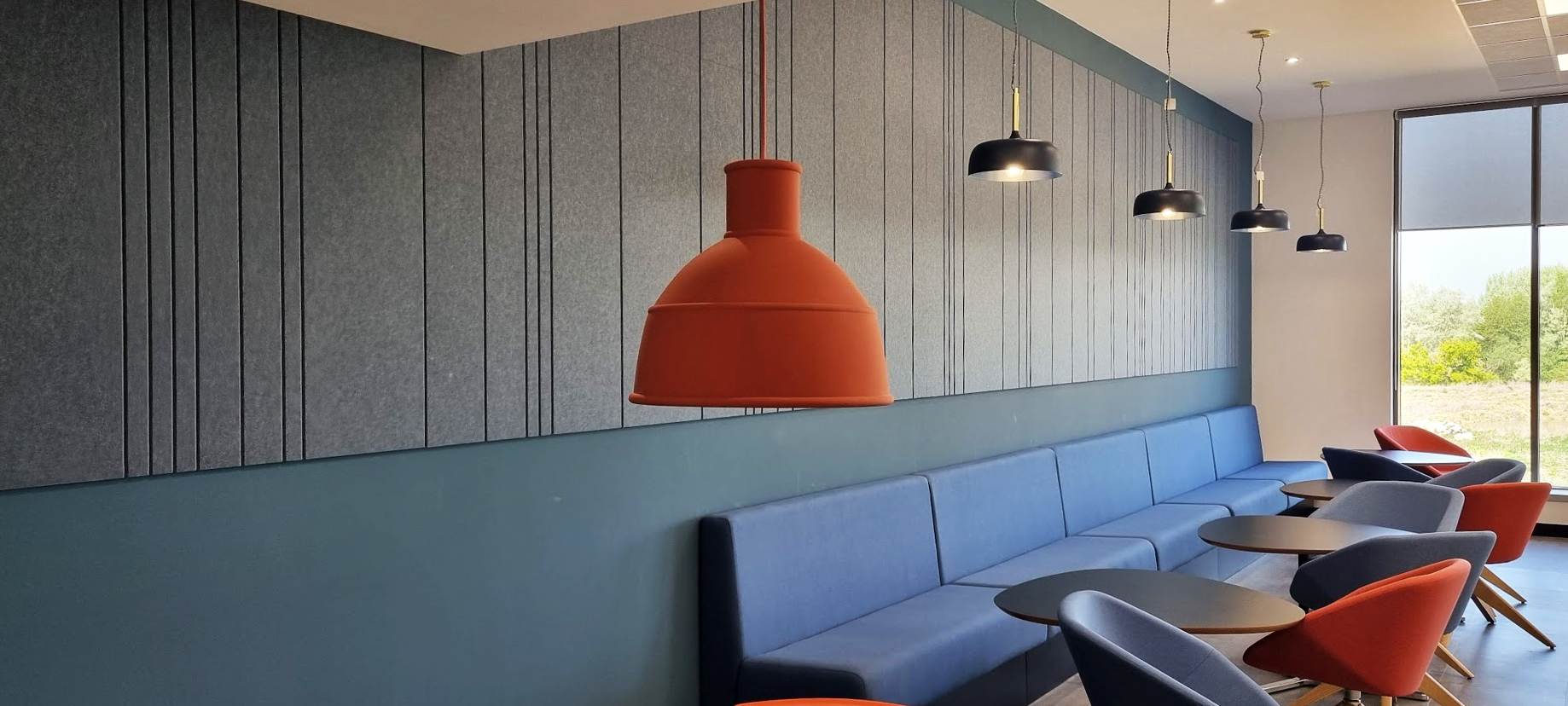
Spaces with high RT60 values sound “live” or echoey, which can be jarring and fatiguing. Acoustic panels, baffles, and rafts help control reverberation by absorbing sound energy.
Ambient Noise Levels
Ambient noise is the background sound in a space — created by HVAC systems, office equipment, or general activity. BS EN ISO 22955 provides guidance on controlling these levels to ensure comfort and performance.
Typical ambient noise level targets:
| Space Type | Recommended Ambient Level (LAeq, dB) |
|---|---|
| Open-plan workspace | 45–50 dB |
| Private office | 40–45 dB |
| Meeting / focus room | 35–40 dB |
| Reception / circulation | 45–55 dB |
| Hospitality / restaurant | 55–65 dB (depending on intent) |
Speech Intelligibility
In collaborative environments, speech clarity matters — both in terms of being heard and, at times, not being heard. Acoustic privacy is just as important as audibility.
The Speech Transmission Index (STI) measures intelligibility and ranges from 0 (bad) to 1 (excellent). In open-plan offices, a low STI between adjacent desks (0.4 or lower) is often desirable to reduce distraction, while in meeting rooms or classrooms, a high STI (0.6–0.8+) is preferred to ensure clarity.
"The earlier you integrate acoustic strategy into a project, the fewer compromises you’ll make later."
Several UK and international bodies offer design targets and compliance recommendations:
- CIBSE Guide B4: Focuses on environmental design including noise control, with advice on acceptable background levels and construction strategies.
- BS EN ISO 22955:2021: Acoustic quality in open offices, covering sound absorption, spatial layout, and background noise limits.
- BB93: Acoustic design for schools, which is often referenced in education-adjacent settings like training centres and libraries.
- WELL Building Standard: Offers acoustic comfort as a feature, encouraging the integration of sound-absorbing materials, spatial zoning, and noise control strategies to support wellbeing.
ekko’s acoustic solutions are designed not just for style, but to meet measurable acoustic goals. Whether it’s reducing RT60 in large atria with ceiling rafts, or improving speech privacy with desk-side panels or hanging baffles, our range is built around real performance metrics.
We collaborate with acoustic consultants, architects, and designers to ensure our solutions meet the needs of each space — from sound-masking zones to acoustic focal points.
When planning an office layout, consider this rule of thumb: the earlier you integrate acoustic strategy, the fewer compromises you’ll make later. Waiting until the end of the fit-out to fix sound problems usually leads to more cost, more disruption, and less effective results.
All ekko Acoustics products are tested to UK fire safety standards and designed to deliver both functional performance and visual harmony. Our wide range of shapes, finishes and colours means you can meet acoustic targets without compromising aesthetics.
Explore our acoustic product range, request material samples, or book a CPD session with our team to learn how acoustic solutions can elevate your workplace designs.
