

Today’s office is no longer a static environment. Businesses are evolving fast — and so are their spatial needs. From hybrid work models to dynamic teams and ever-shifting priorities, the modern workplace needs to do more with less, often in the same footprint. Enter: the agile office.
An agile workspace is one that adapts quickly to change. It encourages collaboration, boosts productivity, and helps teams work the way they want. But designing for agility takes more than movable desks and open-plan layouts. To truly support flexible work, you need to think modular, multifunctional, and — critically — acoustically balanced.
Here are five ways to create a future-proof agile office:
Instead of fixed-use rooms, create a variety of functional zones — think quiet focus areas, informal meeting nooks, hot-desking zones, and social spaces — all within an open layout. Use visual and acoustic cues like felt partitions, baffle ceilings, or suspended acoustic panels to define each zone without building walls.
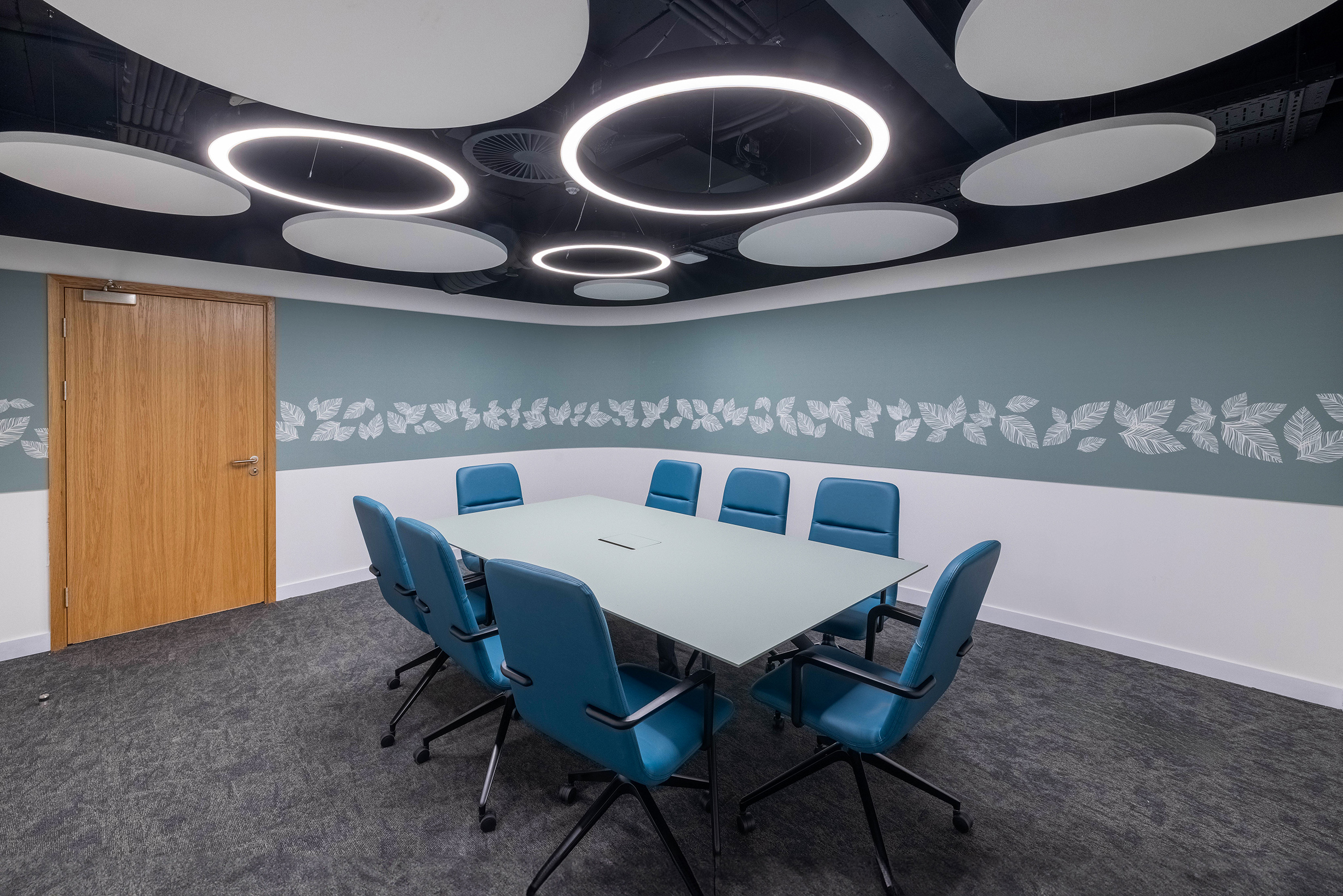
Furniture that can be easily reconfigured helps teams reshape their space in minutes, not months. But flexible furniture also needs sound control. Open spaces with hard surfaces are often prone to distracting echo and noise.
Agile work is all about balance — quiet concentration when you need it, seamless collaboration when you don’t. Creating pockets of privacy within open-plan spaces is essential. Soft furnishings, felt-wrapped screens, and suspended baffles can soften sound while visually separating zones.
We often design workplaces from the floor up — but ceilings offer huge potential for modularity and acoustic improvement. Suspended acoustic panels and rafts help manage reverberation and reduce sound bleed across zones, especially in high-ceiling or hard-surface environments.
“With smart design choices and the right materials, you can create environments that are just as agile as the people who use them.”
Perhaps the most important rule of agile design: plan for what you can’t predict. Use adaptable materials, modular systems, and removable features that allow for change. Spaces should be easy to expand, rearrange, or repurpose as business needs shift.
Whether you’re designing a flexible workspace for a scale-up, a co-working hub, or an enterprise HQ, acoustic performance and adaptability go hand in hand. With smart design choices and the right materials, you can create environments that are just as agile as the people who use them.
Explore our Acoustic Products, request material samples, or book a CPD session with our team to learn how acoustic solutions can elevate your flexible workspace designs.
