
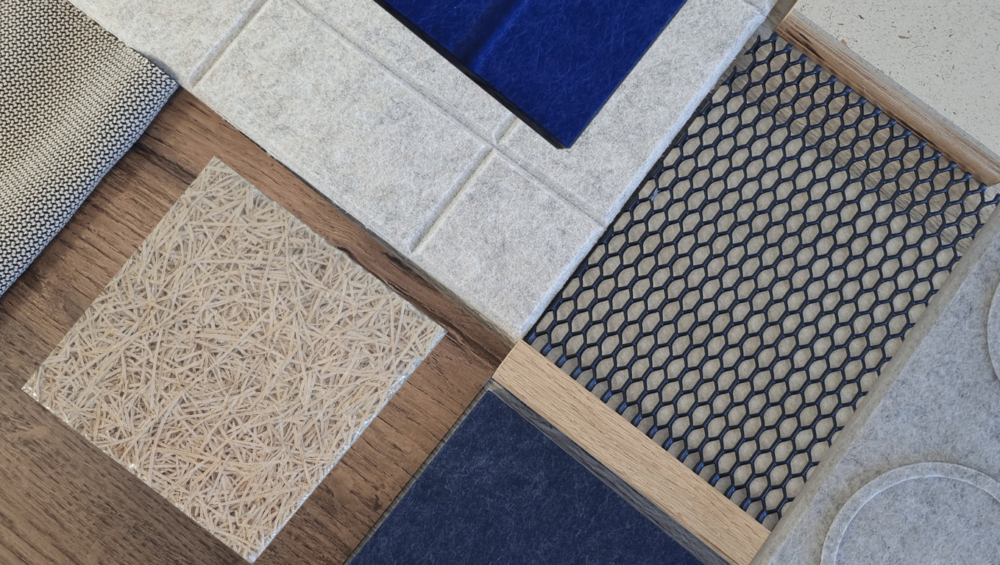
Designing for sound isn’t just about where you place panels — it’s about what they’re made from. The materials used in acoustic products have a profound impact not only on how they perform, but how they look, feel, and age over time.
In commercial interiors, where performance has to coexist with brand identity, sustainability goals, and tight deadlines, material choice is a powerful design decision. At ekko Acoustics, we work primarily with high-performance acoustic felt — but it’s far from the only option in our material toolbox.
In this post, we explore how different materials absorb or control sound, how they perform under fire safety and environmental regulations, and how to choose the right one for your next project.
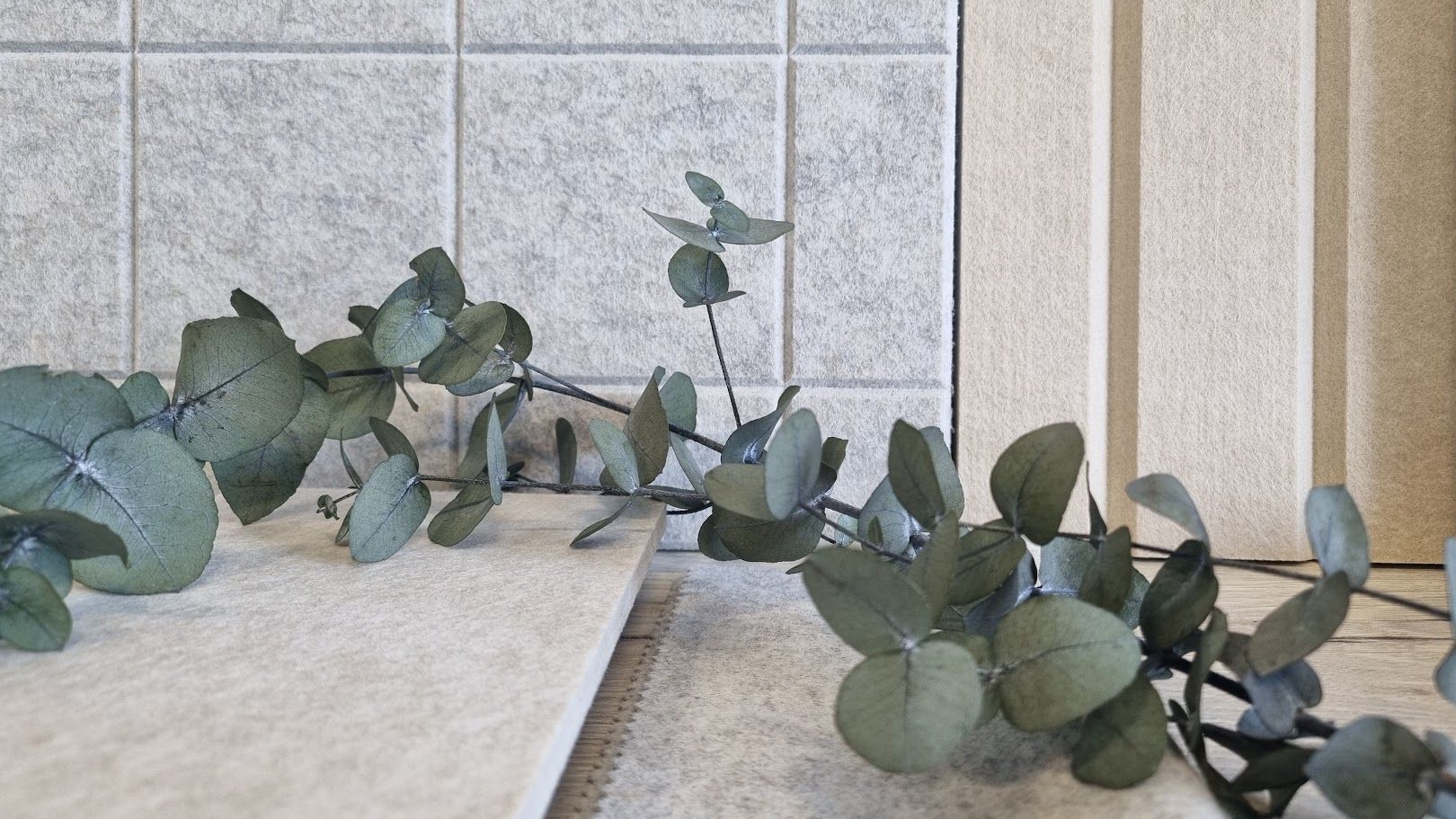
To understand why some materials are better at controlling sound than others, it’s useful to look briefly at how absorption works.
Sound waves carry energy. When they hit a surface, that energy either bounces off (reflection), passes through (transmission), or gets converted into heat within the material (absorption). For a material to be good at absorbing sound, it needs two main characteristics:
Porosity: Tiny interconnected air pockets that trap and dissipate sound waves.
Thickness and density: The ability to absorb a wide range of frequencies — particularly the low to mid-range human speech band (500 Hz – 2000 Hz).
Different materials handle these requirements in different ways. Here’s how the most widely used acoustic materials compare.
What it is:
Acoustic felt is usually made from recycled PET (polyethylene terephthalate) — a soft, dense material formed from plastic bottles. At ekko, we use 9mm and 12mm PET felt for our SoundCushion range and baffles, which balances absorption performance with design flexibility.
Why it works:
Felt is porous, lightweight, and flexible. It’s effective at absorbing mid to high frequencies (think voices, typing, footsteps), which makes it ideal for open-plan offices, coworking spaces, classrooms, and hospitality environments.
Design versatility:
Available in over 40 colours, felt can be laser-cut into custom shapes, layered, printed, or laminated to create bespoke installations that integrate into brand identities and biophilic or contemporary schemes.
Sustainability credentials:
Made from 60–70% recycled content
Fully recyclable
No adhesives required
Durable and washable
Best used for:
Wall panels, ceiling rafts, suspended baffles, decorative acoustic features, lighting integration.
What it is:
Natural wood surfaces — often used in slatted or perforated configurations — combined with an acoustic backing such as mineral wool or PET felt.
Why it works:
Timber on its own isn’t absorbent. But when used as a façade in front of a sound-absorbing substrate, it acts as a diffuser and absorber in one. The slatted or perforated structure helps scatter sound waves while allowing energy to pass through to the absorbing layer.
Design strengths:
Warm, textured, and timeless, timber brings natural beauty to commercial interiors. It’s especially effective in biophilic schemes, wellness-led design, and high-end projects looking for a softer, more premium finish.
Sustainability credentials:
FSC-certified and low-VOC options available
Carbon sequestering
Biodegradable or recyclable depending on construction
Best used for:
Acoustic wall panels in meeting rooms, hospitality spaces, lobbies, and wellness areas. Can be used to mask HVAC and lighting integration.
“Material choice isn’t just about absorption — it’s a design decision that shapes how people hear, feel and connect within a space.”
What it is:
A natural, renewable material harvested from the bark of cork oak trees. Cork has a honeycomb cell structure, making it both lightweight and highly porous.
Why it works:
The inherent air pockets in cork act as natural sound absorbers. While it may not match the precision absorption coefficients of engineered felt, it’s effective across a range of frequencies and contributes positively to both acoustics and indoor air quality.
Aesthetic and tactile appeal:
Cork adds texture, warmth, and visual softness. It’s increasingly popular in sustainable design and wellness-led environments.
Sustainability credentials:
100% natural and renewable
Biodegradable
Harvesting cork bark does not harm the tree
Best used for:
Accent wall panels, soft zones in coworking spaces, breakrooms, and creative environments. Often used in combination with other materials.
Some of the most effective acoustic products today combine multiple materials to create multi-layered systems tuned for specific frequencies or applications. For instance:
A felt-wrapped timber baffle offers both absorption and structure.
A perforated metal face with an acoustic core can deliver a clean, industrial aesthetic while controlling reverberation.
Fabric-wrapped mineral fibre panels can offer Class A absorption while presenting a softer visual presence in hospitality or healthcare settings.
These hybrid systems allow designers to achieve both targeted acoustic performance and design flexibility, especially in high-traffic or brand-sensitive environments.
When specifying acoustic materials, it’s important to balance performance with visual intent, cost, and environmental requirements. Some key considerations:
Performance requirements: What is the target reverberation time or NRC (Noise Reduction Coefficient)? Does it need to absorb, diffuse, or isolate?
Fire rating: All ekko materials are tested to UK fire safety standards (such as BS EN 13501).
Maintenance: Will the product need to be cleaned, sanitised or replaced regularly?
Design intent: Should the acoustic elements stand out or blend in?
Sustainability goals: Does the project prioritise recycled content, VOC ratings, or product lifecycle?
At ekko Acoustics, we manufacture and prototype in-house using primarily recycled felt — a material we believe strikes the ideal balance between performance, sustainability, and visual flexibility. But we also work with timber, metal, cork, and hybrid materials to deliver solutions that integrate seamlessly into your design language.
From branded wall panels to sculptural rafts, our products are tailored to the space, the user and the aesthetic — because acoustic comfort shouldn’t mean compromise.
Ready to create spaces that sound as good as they look?
Explore our acoustic materials and product range, request samples, or speak to our design team about tailored solutions for your next project. We also offer CPD sessions for architects, designers and specifiers interested in learning how acoustic materials perform — and how to integrate them without disrupting design.
