
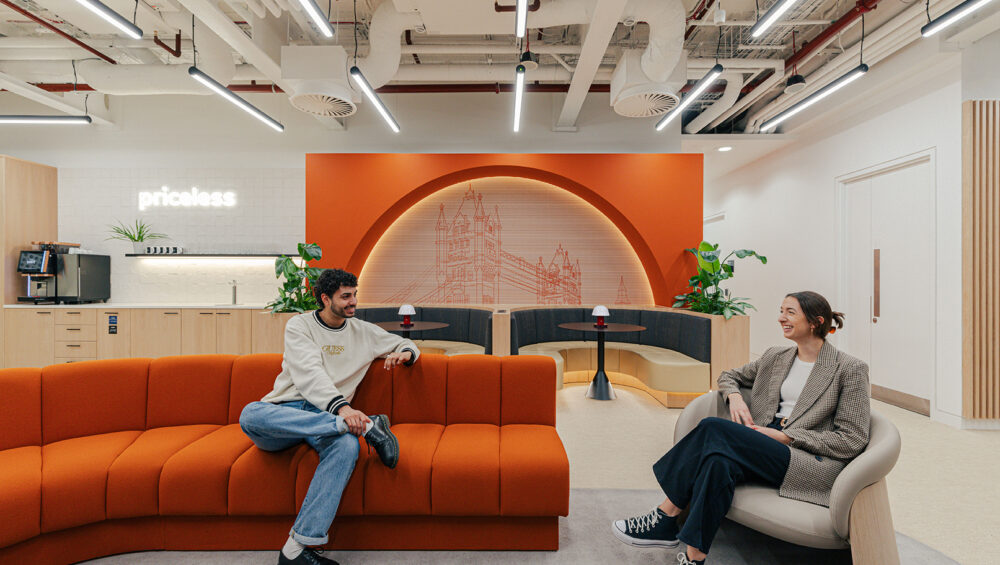
The shift to hybrid work has fundamentally changed how offices are used. Gone are the days when every square metre had to be planned for 100% occupancy. Instead, workplaces now need to be flexible: supportive of heads‑down, deep work for individuals who come in for focus days; adaptable for dynamic team collaboration; and safe and comfortable for the occasional all‑hands gathering.
That flexibility places new demands on workplace design—and acoustics sits at the centre of the challenge. A poorly considered acoustic environment undermines the very benefits organisations seek from hybrid working: concentration, wellbeing, and effective conversation. Conversely, thoughtfully engineered acoustic solutions can transform a hybrid office into a high‑performing, flexible workplace that supports both remote and in‑person activities.
This post explains how design teams, workplace strategists and facilities managers can plan and deliver hybrid offices that sound as good as they look—with practical guidance, specification tips and product-driven solutions from ekko Acoustics.
A successful acoustic strategy starts with understanding how the space will be used. Hybrid offices commonly combine several activity types within the same floorplate:
Focus zones. Desks and touchdown spaces where people need concentration and low distraction.
Collaboration hubs. Meeting rooms, project spaces, and informal collaboration corners for small groups.
Social/amenity spaces, Kitchens, breakout areas, and cafés where noise and bustle are expected.
Quiet rooms and phone booths. Small enclosed spaces for calls, video interviews or focused work.
Each of these zones has different acoustic priorities. The design challenge is to allow them to coexist without audible interference, while keeping the space flexible enough to adapt to changing occupancy patterns.

Rather than aiming for a single ‘perfect’ acoustic condition across the whole workplace, set clear goals by zone:
Speech privacy in focus zones. Avoid intelligible speech leakage from collaboration areas into desks.
Controlled reverberation in collaboration hubs. Provide a lively yet intelligible acoustic for team discussion and presentation.
Absorption and impact control in amenity spaces. Curb excessive background noise while retaining the social energy of the space.
Noise isolation for quiet rooms. Ensure phone booths and focus rooms are effective for confidential or concentration work.
Set measurable performance objectives with your acoustic consultant where needed. Good acoustic design is about managing trade‑offs: too much absorption everywhere can make spaces feel ‘dead’, while too little reduces speech privacy and increases distractio
Focus zones
Locate focus desks away from noisy circulation routes and amenity spaces where possible.
Use high‑performing ceiling treatments (panels, clouds, baffles) above desk clusters to reduce reverberation and mask intrusive sound.
Consider partial-height acoustic screens between desks that combine absorptive material with aesthetic finishes.
Provide access to quiet rooms for phone/video calls so desk occupants don’t need to take conversations at their workstation.
Collaboration hubs
Design collaboration hubs with mixed absorption, a blend of absorptive panels and reflective surfaces to maintain speech intelligibility during group work.
Use modular movable acoustic screens or sliding partitions to vary the acoustic size of the room for different group sizes.
Integrate acoustic lighting or combine acoustic and luminaire solutions for a unified aesthetic and functional presence.
Amenity spaces
Introduce soft, absorptive finishes on ceilings and walls adjacent to kitchen and café areas to reduce sound bounce and reverberation.
Use suspended baffles or decorative acoustic clouds to break up large exposed ceilings while adding visual interest.
Choose flooring and furniture that reduce impact noise (e.g., rugs, upholstered seating).
Quiet rooms & phone booths
Ensure booths and quiet rooms are properly isolated with seals, a fully absorptive internal finish, and an effective door threshold to reduce flanking paths.
Inside, use high‑absorption linings (panels or modular felt wraps) to prevent standing waves and improve call clarity.
ekko’s product range is particularly well-suited to hybrid office needs because it allows designers to solve acoustic problems without sacrificing aesthetics or flexibility. Here are practical solutions and how to apply them:
Wall panels. Ideal for reducing first‑reflection energy at head height in both open plan and collaboration spaces. Use a mix of full‑height and mid‑height panels to balance privacy and openness.
Ceiling baffles & clouds. Suspended elements that absorb sound in open ceilings while remaining visually lightweight. Baffles are perfect above desk clusters, clouds above meeting hubs.
Free‑standing screens and partitions. Useful as flexible, reconfigurable dividers in touchdown areas. They can be moved as team sizes and layouts change.
Acoustic timber slats. For areas that need a premium finish. Slatted systems provide mid‑frequency absorption while offering a refined appearance.
Soft acoustic panels. Washable, fabric‑covered panels that work well in hospitality zones, client meeting rooms and breakout areas where tactile softness is desirable.
Each product can be specified with different core densities, finishes and mounting systems—allowing the acoustic response and visual language of a scheme to be tuned precisely.
"Hybrid offices are less about capacity and more about experience. The best workplaces allow teams to choose how and where they work without being undermined by poor acoustics."
Acoustics and spatial planning must work together. Clear zoning and intuitive circulation reduce accidental acoustic intrusion between areas:
Buffer zones. Place storage rooms, plant rooms or circulation corridors between particularly noisy and quiet areas to act as acoustic buffers.
Staggered adjacency. Avoid placing meeting rooms directly adjacent to quiet desk rows; if unavoidable, increase wall construction or include absorptive slabs at the shared face.
Wayfinding and behavioural cues. Good signage, flooring changes, and visual cues remind people where to take calls and where quieter behaviour is expected.
Hybrid meetings are common in the new office. Sound reinforcement, microphones, and good meeting etiquette all affect room performance:
Invest in good AV. Centrally placed microphones and localised speakers reduce the need for raised voices and improve intelligibility for remote participants.
Acoustic treatment in meeting rooms. Treat the rear and side walls to control slap echoes; ceiling clouds above table areas can dramatically improve intelligibility.
Meeting etiquette. Promote simple rules (mute when not speaking, close doors during calls) to reduce spill and distraction.
Acoustic design must be verified on site. Commissioning helps ensure design intent has become reality:
Walk‑through assessment. Listen during typical occupancy to identify hot spots and noisy adjacencies.
Simple tests. Speech privacy checks, noise level observations and inspections for flanking noise paths will reveal common issues.
Iterate. Treat the initial fit‑out as the start point. Small interventions, additional panels above noisy zones, more screens for benching are often the most cost‑effective.
For complex schemes, work with an acoustic consultant to set and verify measurable targets.
Hybrid offices must be resilient and easy to maintain:
Washable and replaceable coverings. Choose products with removable covers to extend life and ease cleaning.
Recyclability and low‑VOC materials. Specify panels with recycled content and low emissions to support wellbeing and corporate sustainability goals.
Modularity. Favour systems that can be reconfigured or relocated as working patterns change to reduce waste from future refurbishments.
Map activity zones and anticipated occupancy patterns.
Prioritise speech privacy for focus areas and intelligibility for collaboration hubs.
Choose a mix of ceiling, wall and freestanding treatments; avoid one‑size‑fits‑all solutions.
Provide isolated, properly detailed quiet rooms/phone booths for confidential calls.
Specify washable, replaceable finishes and sustainable cores where possible.
Coordinate acoustic strategy with lighting, HVAC and AV systems (avoid locating noisy plant above quiet zones).
Plan for commissioning and post‑occupancy tweaks.
Hybrid offices are less about capacity and more about experience. The best workplaces allow teams to choose how and where they work without being undermined by poor acoustics. Acoustic design is not an afterthought; it is a strategic tool that shapes behaviour, supports hybrid meeting culture and protects employee wellbeing.
ekko Acoustics specialises in products and systems that help design teams achieve these aims: attractive, scalable, and performance‑driven acoustic treatments that complement modern hybrid workplace strategies.
